'%3e%3cpath%20d='M8.09023%2019.6947H16.349L14.0199%2032.6762H6.6C4.94315%2032.6762%203.60001%2031.333%203.6%2029.6762V6.6C3.6%204.94315%204.94315%203.6%206.6%203.6H20.7152L8.09023%2019.6947ZM31.3119%203.6C32.9687%203.60012%2034.3119%204.94322%2034.3119%206.6V29.6762C34.3119%2031.333%2032.9687%2032.6761%2031.3119%2032.6762H16.9613L31.0521%2014.7123H22.7934L24.7875%203.6H31.3119Z'%20fill='var(--fill-0,%20%232BE6FF)'/%3e%3c/g%3e%3cpath%20id='Vector%20210'%20d='M7.6%2019.6L20.6%203.6H25.1L23.1%2014.1L31.1%2014.6L17.1%2032.6H14.1L16.1%2019.6H7.6Z'%20fill='none'/%3e%3cpath%20id='Subtract_2'%20d='M8.09023%2019.6947H16.349L14.0199%2032.6762H6.6C4.94315%2032.6762%203.60001%2031.333%203.6%2029.6762V6.6C3.6%204.94315%204.94315%203.6%206.6%203.6H20.7152L8.09023%2019.6947ZM31.3119%203.6C32.9687%203.60012%2034.3119%204.94322%2034.3119%206.6V29.6762C34.3119%2031.333%2032.9687%2032.6761%2031.3119%2032.6762H16.9613L31.0521%2014.7123H22.7934L24.7875%203.6H31.3119Z'%20fill='url(%23paint0_linear_274_1147)'/%3e%3c/g%3e%3cdefs%3e%3cfilter%20id='filter0_f_274_1147'%20x='0'%20y='0'%20width='37.9119'%20height='36.2762'%20filterUnits='userSpaceOnUse'%20color-interpolation-filters='sRGB'%3e%3cfeFlood%20flood-opacity='0'%20result='BackgroundImageFix'/%3e%3cfeBlend%20mode='normal'%20in='SourceGraphic'%20in2='BackgroundImageFix'%20result='shape'/%3e%3cfeGaussianBlur%20stdDeviation='1.8'%20result='effect1_foregroundBlur_274_1147'/%3e%3c/filter%3e%3clinearGradient%20id='paint0_linear_274_1147'%20x1='18.956'%20y1='3.6'%20x2='18.956'%20y2='32.6762'%20gradientUnits='userSpaceOnUse'%3e%3cstop%20stop-color='%232BE6FF'/%3e%3cstop%20offset='1'%20stop-color='%231A8A99'/%3e%3c/linearGradient%3e%3c/defs%3e%3c/svg%3e)
From Energy Forecasts to Operational and Trading Decisions
Energy forecasting models are becoming central to operational and trading decisions across modern energy systems. In daily operations, their value is practical: they help teams decide what to do next before cost, imbalance, missed dispatch value, or market exposure increases.
A forecast can help an operator prepare for lower solar production, reduce exposure before a demand peak, review a battery dispatch window, adjust a trading position, or decide whether a market signal is strong enough to act on.
The forecast itself is not the outcome. The decision is.
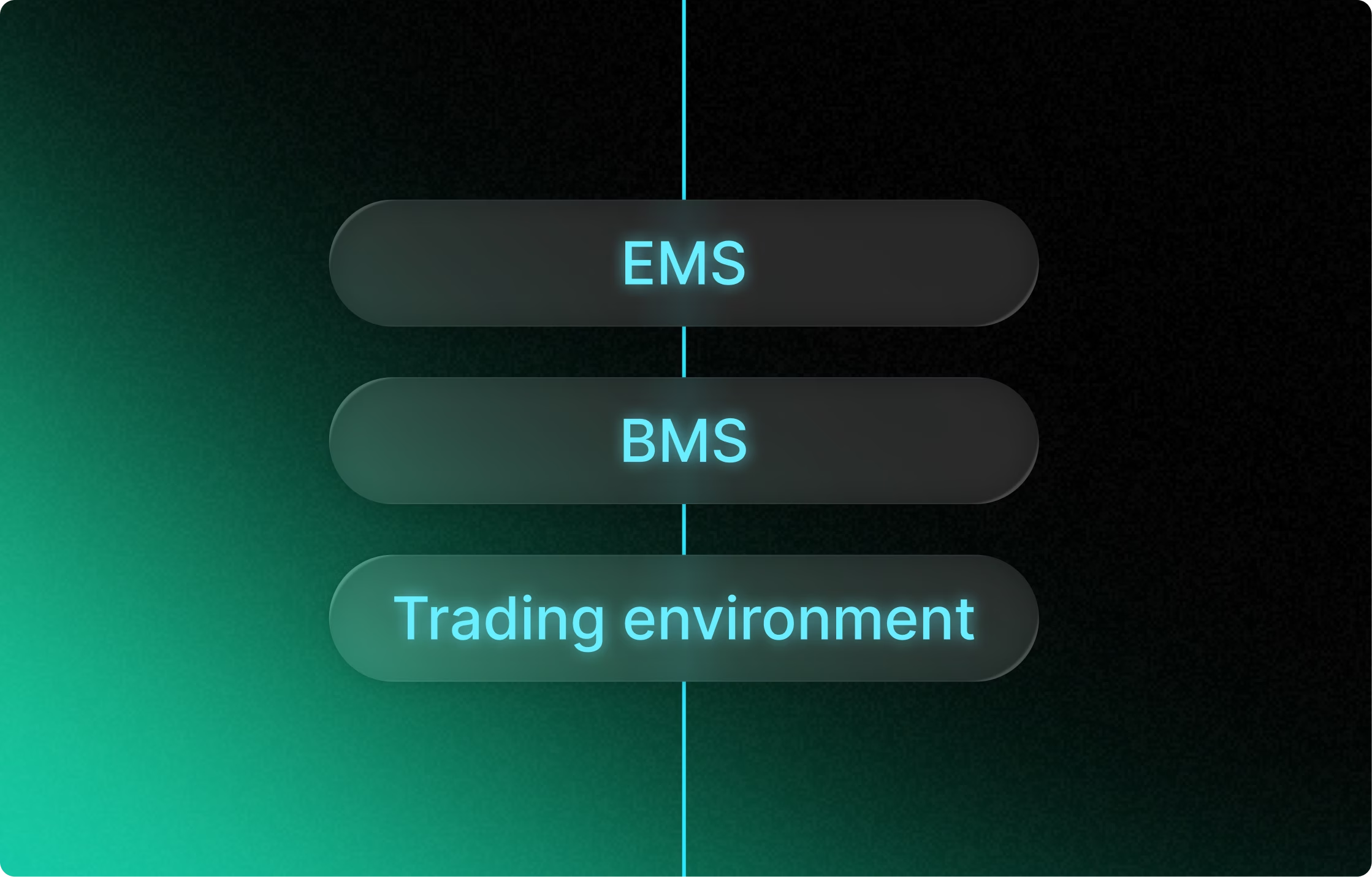
For EMS platforms, BMS providers, BESS operators, IPPs, OMIE participants, and EPEX market participants, forecasting should not sit outside the workflow as a passive report. It should give teams enough visibility to act before the operating or trading window closes.
The moment a forecast becomes useful
A forecast becomes useful at the moment it changes timing, confidence, or action.
If a solar forecast shows a likely production drop, the operator can review scheduling or imbalance exposure. If a load forecast shows demand moving toward a peak, the building or energy team can adjust consumption before the peak occurs. If a price forecast shows a possible trading window, the trader or BESS operator can review whether the expected value justifies action.
In each case, the forecast is only part of the decision.
The team still needs to know what is affected, how material the signal is, how much time remains, who owns the response, and what action is available.
That is the difference between a forecast and an operating signal. A forecast says what may happen. An operating signal helps define what should happen next.
Real-time energy decisions are rarely single decisions
Energy decisions are often connected.
A forecasted change in solar generation may affect production planning, imbalance exposure, storage behavior, and trading assumptions. A forecasted load peak may affect procurement, building automation, demand response, and battery use. A forecasted price movement may affect trading strategy, dispatch timing, and risk exposure.
This is why real-time forecasting should be understood as decision support across a chain of actions.
One forecast can influence several teams. The same solar forecast may be relevant to an IPP portfolio manager, an EMS platform, a trader, and a BESS operator. The same load forecast may be relevant to building automation, energy procurement, and peak load control.
The forecast needs to reach each user in the format they can act on.
Operational decisions: acting before conditions change
Operational energy decisions are focused on reliability, cost control, and physical asset behavior.
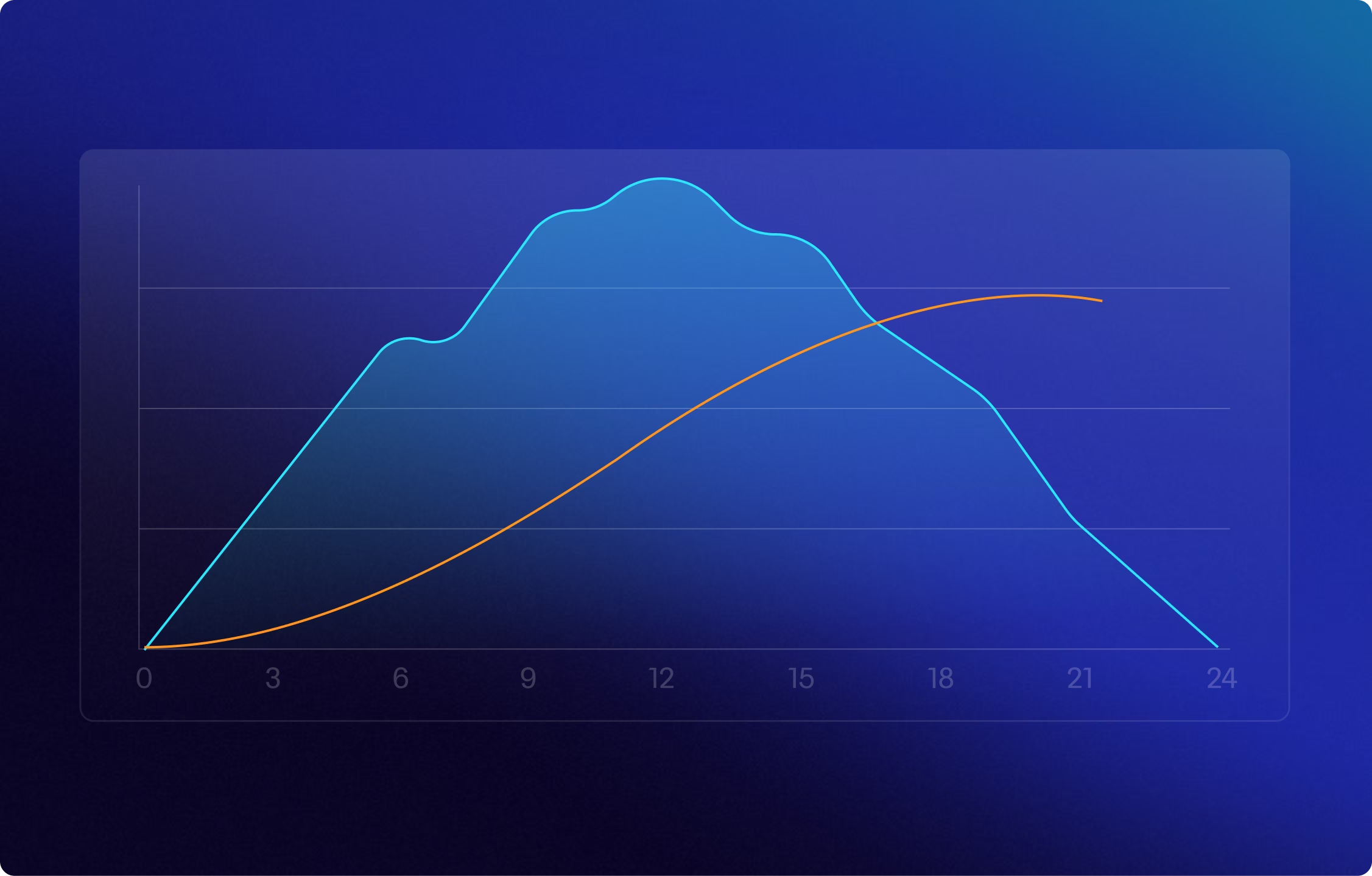
Solar generation forecasting supports decisions around production planning, scheduling, curtailment preparation, and imbalance review. When expected PV output shifts, the operator needs to understand whether the change is small enough to monitor or large enough to act on.
Load consumption forecasting supports decisions around demand peaks, building automation, equipment scheduling, and procurement planning. When expected demand moves toward a threshold, the system can trigger a review before the cost or capacity impact appears.
Battery-related forecasting supports decisions around charge, discharge, and hold timing. A BESS operator needs to understand not only expected prices, but also expected load, generation, asset state, and operational constraints.
In all three cases, the forecast creates value by extending the decision window. Earlier visibility allows teams to assess the expected impact, review operational options, and respond before cost, imbalance, or dispatch exposure becomes harder to control.
Trading decisions: acting before the market window closes
Trading decisions depend on timing, confidence, and exposure.
A price forecast can support day-ahead positioning, intraday adjustment, bid and offer strategy, price spike preparation, and negative price review. But the forecast must be specific enough to match the trading window.
A general view of price direction is not always enough. Traders need to know which interval is affected, how material the expected movement is, how confident the signal appears, and what exposure exists if no action is taken.
For OMIE and EPEX participants, this matters across both day-ahead and intraday workflows.
In day-ahead markets, forecasts can support position planning before delivery. In intraday markets, they can support adjustment as new information appears. For BESS operators, the same price forecast can influence whether to charge, discharge, or hold capacity.
The forecast does not replace the trader’s judgment. It sharpens the decision environment.
Battery dispatch decisions: where forecasts meet asset economics
Battery dispatch is one of the clearest examples of forecasting directly affecting asset value.
A battery can charge, discharge, or remain idle. Each option has a cost, an opportunity, and a constraint. The right decision depends on expected price movement, expected load, renewable generation, state of charge, technical limits, degradation considerations, and commercial strategy.
A forecast helps organize these signals before the decision is made.
If the forecast suggests a favorable price window, the operator still needs to assess whether the battery is available, whether the expected spread is strong enough, whether another opportunity may appear later, and whether dispatch aligns with asset constraints.
This makes forecasting a filter. It helps separate weak signals from decision-grade opportunities. It can also reduce unnecessary action when the expected gain is too uncertain or too small relative to asset impact.
Load decisions: where forecasts protect cost and comfort
Load forecasting is not only about predicting consumption. It is about understanding when demand may require intervention.
In BMS and EMS environments, load forecasts can support peak load management, demand response, automation, procurement planning, and operational scheduling.
A forecasted demand peak may trigger several possible actions. The building system may adjust equipment schedules. The operator may shift flexible demand. The energy team may review procurement. A battery may be prepared to support the load. Non-critical consumption may be reduced for a limited period.
The forecast is valuable because it helps the team act before the peak becomes fixed.
This matters especially for buildings, industrial sites, and portfolios where small timing differences can affect energy cost, capacity use, and operating comfort.
Solar decisions: where forecasts reduce uncertainty around production
Solar production is highly sensitive to weather, irradiance, site conditions, and asset behavior.
A solar forecast helps operators understand expected production before the delivery period. But the strongest value comes from identifying deviation risk.
If production is expected to fall below plan, the operator may need to review imbalance exposure. If production is expected to exceed plan, the team may need to consider curtailment risk, storage options, or trading opportunities. If forecast confidence is low, the team may need to monitor the period more closely rather than treat the expected value as stable.
This is why solar forecasting should show more than one number.
A useful forecast helps operators understand whether expected production is reliable, uncertain, or materially different from the previous view.
The human and organizational factors
Even the most accurate forecast fails if it lacks ownership. Someone must be responsible for reviewing the signal, a clear threshold must trigger action, and the workflow must route the information to the decision-maker in time.
Not every signal should trigger action. Good systems use prediction intervals, severity levels, and thresholds to reduce operational noise and focus attention on material events.
Automation plays an important supporting role: flagging events, routing signals, and executing low-risk routine actions, but human oversight remains essential for high-exposure decisions involving financial risk, grid compliance, or asset health.
Not every forecast should trigger action
Decision-ready forecasting does not mean constant intervention.
In energy systems, acting too often can create operational noise. A forecast should help teams distinguish between normal variance and material exposure.
This is where thresholds matter. A small change in load may not require action. A minor price movement may not justify a trading review. A solar deviation may be acceptable if it falls inside the expected confidence range.
The system should help teams see when a signal matters.
That requires more than expected values. It requires confidence ranges, severity levels, thresholds, and workflow context.
The goal is not to make teams react to every movement. The goal is to make the relevant movements visible before they become expensive.
Automation should support control, not remove it
Forecasting can support automation, but it should not remove operational accountability.
Some actions can be automated, especially repeatable low-risk actions. Others should remain under human review, especially when financial exposure, grid compliance, asset degradation, or trading risk is involved.
A practical approach is to automate detection, routing, and routine responses while keeping decision rights clear.
For example, a system may automatically flag a likely peak load event, send a forecast deviation into an EMS, or route a price signal to a trading workflow. The final decision may still sit with an operator, trader, or asset manager.
This balance allows teams to move faster without losing control.
What decision-ready forecasting looks like
Decision-ready forecasting has a specific character.
It arrives before the decision window closes. It reflects the asset or market it serves. It shows uncertainty, not only the expected value. It connects to a threshold, alert, system, or decision owner. It can be measured after the decision is made.
In practice, this means a solar forecast should support production planning, not only show expected PV output. A load forecast should support peak management, not only predict demand. A price forecast should support trading or dispatch review, not only show a price curve.
The forecast should always connect to the question: what can the team do with this now?
Measuring whether forecasts improved decisions
Forecasting should be evaluated by the quality of the decisions it supports.
For solar generation, this may mean reduced deviation exposure, stronger scheduling, or fewer unnecessary interventions.
For load consumption, it may mean fewer unmanaged peaks, more precise procurement, or more effective demand response.
For battery dispatch, it may mean stronger dispatch timing, higher asset utilization, or fewer low-value cycles.
For trading, it may mean stronger timing discipline, clearer position review, or lower exposure during volatile intervals.
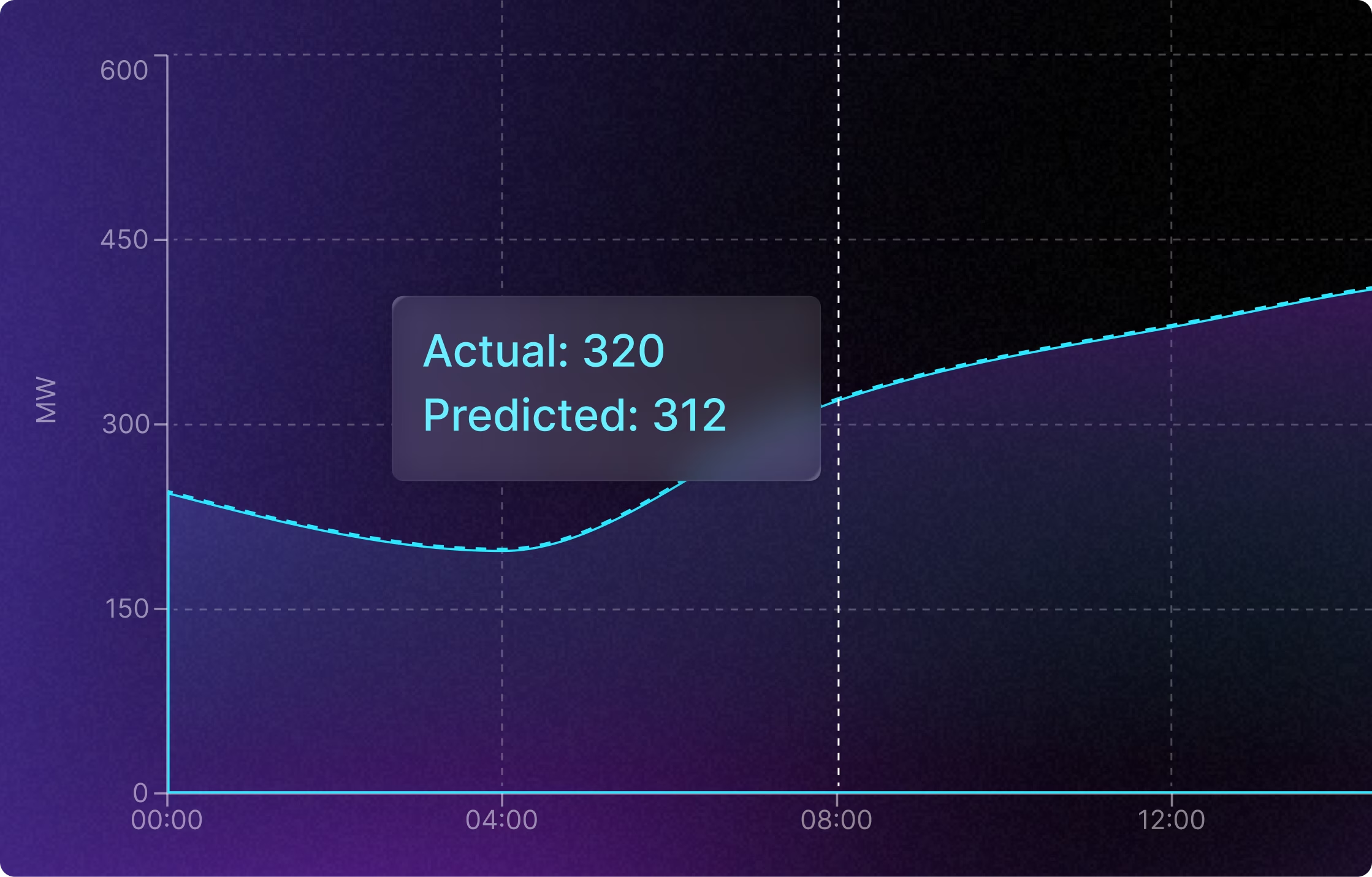
Accuracy remains important, but accuracy alone does not prove operational value. A forecast can be accurate and still unused. A less precise forecast can still be valuable if it reaches the right workflow early enough and supports a measurable decision.
Forecasting models enable real-time energy decisions when they move beyond prediction and become part of the operating workflow.
Their value appears when a team can act earlier, with clearer context, before cost, imbalance, missed dispatch value, or trading exposure increases.
For EMS platforms, BMS providers, BESS operators, IPPs, OMIE participants, and EPEX market participants, forecasting should be designed around decision windows, thresholds, ownership, and measurable outcomes.
A forecast becomes valuable when it helps answer a practical question: what should we do next?
Forecasts should reach the decision window
Energy forecasts are only useful when they reach the right workflow before the decision window closes.
For teams working across solar generation, load consumption, market pricing, battery dispatch, or trading operations, it may be worth reviewing where predictive signals could support decisions with measurable operational or commercial impact.
Nexenergie can help assess how forecasting could fit into those workflows and where it may support timely, decision-ready action.