
Production-grade forecasting models for energy systems
48-hour-ahead forecasting for solar generation, load consumption, and market pricing with up to 94.7% accuracy, designed for energy management and trading.
- EMS Platforms
- BMS Solutions
- IPP Companies
- BESS Operators
- OMIE Traders
- EPEX Traders
Solar Generation Forecast
Predict photovoltaic energy production based on weather data, historical generation, and asset performance

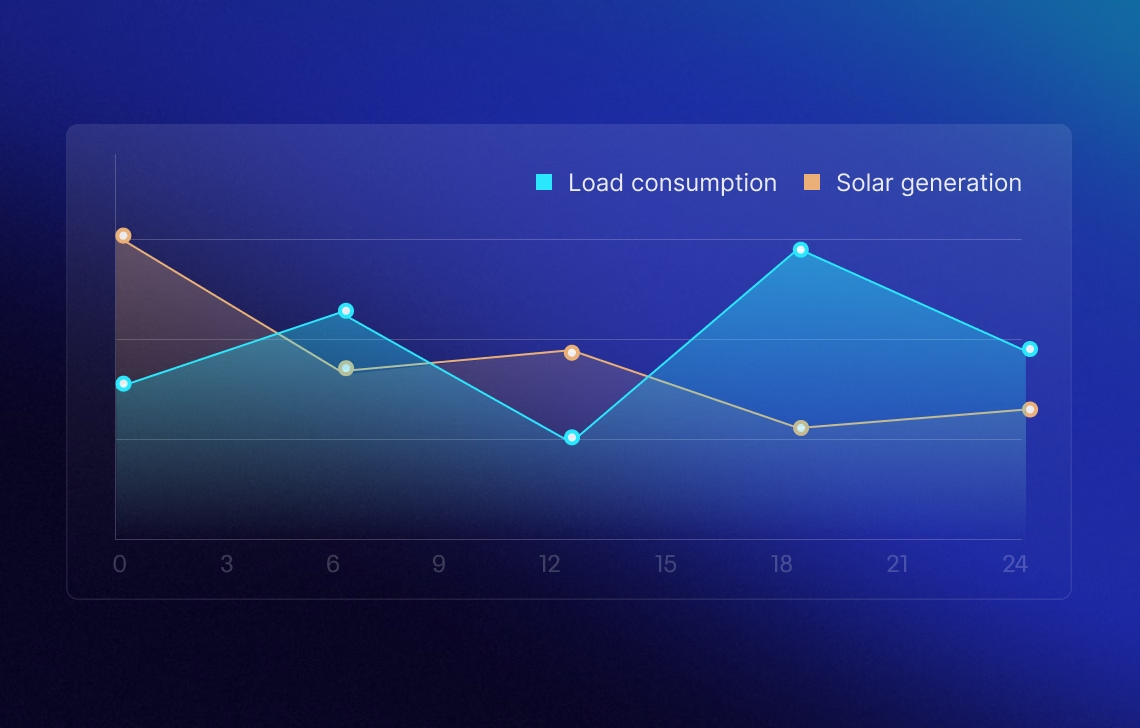
Load Consumption Forecast
Forecast energy demand across assets, buildings, or portfolios using historical usage patterns and real-time signals

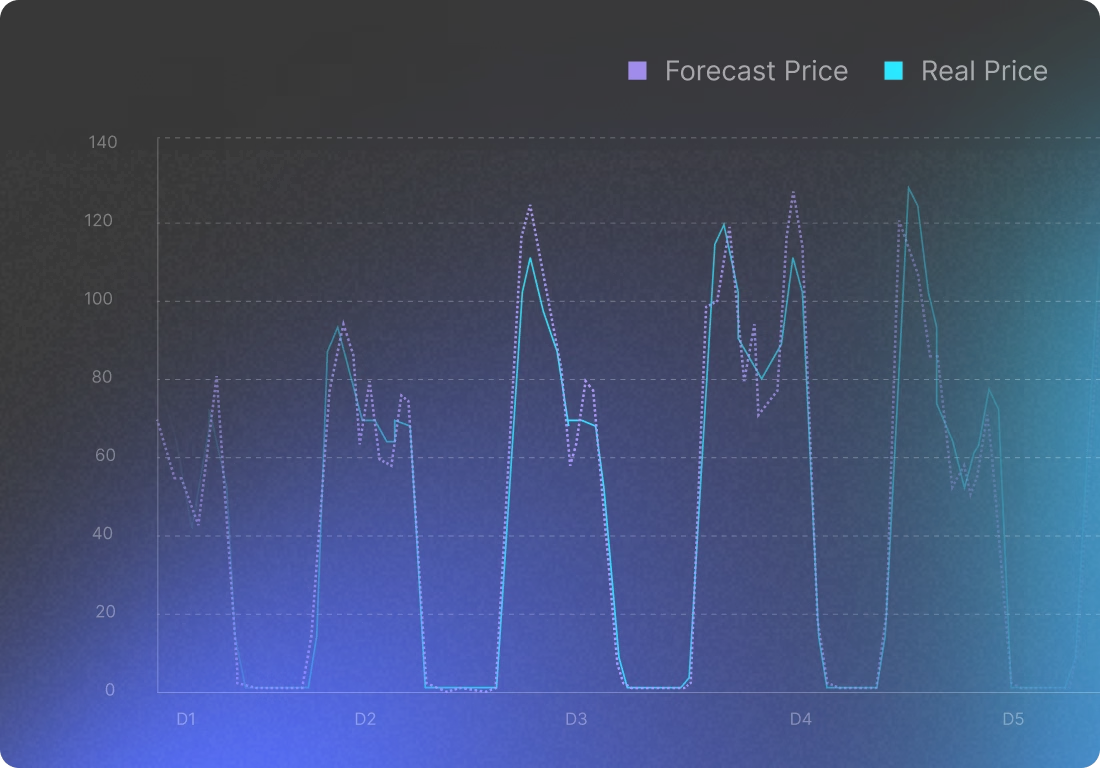
Market Price Forecast
Predict day-ahead and intraday electricity prices using market data, historical trends, and external signals

Built to operate within your infrastructure
Solar Generation Forecast
Predict photovoltaic energy production based on weather data, historical generation, and asset performance

Move from energy data to predictive decisions
Driving performance at operational decisions
- Minimize imbalance penalties
- Optimize energy purchasing
- Improve overall system efficiency

- Anticipate production and demand gaps
- Reduce penalty exposure
- Improve balancing strategies

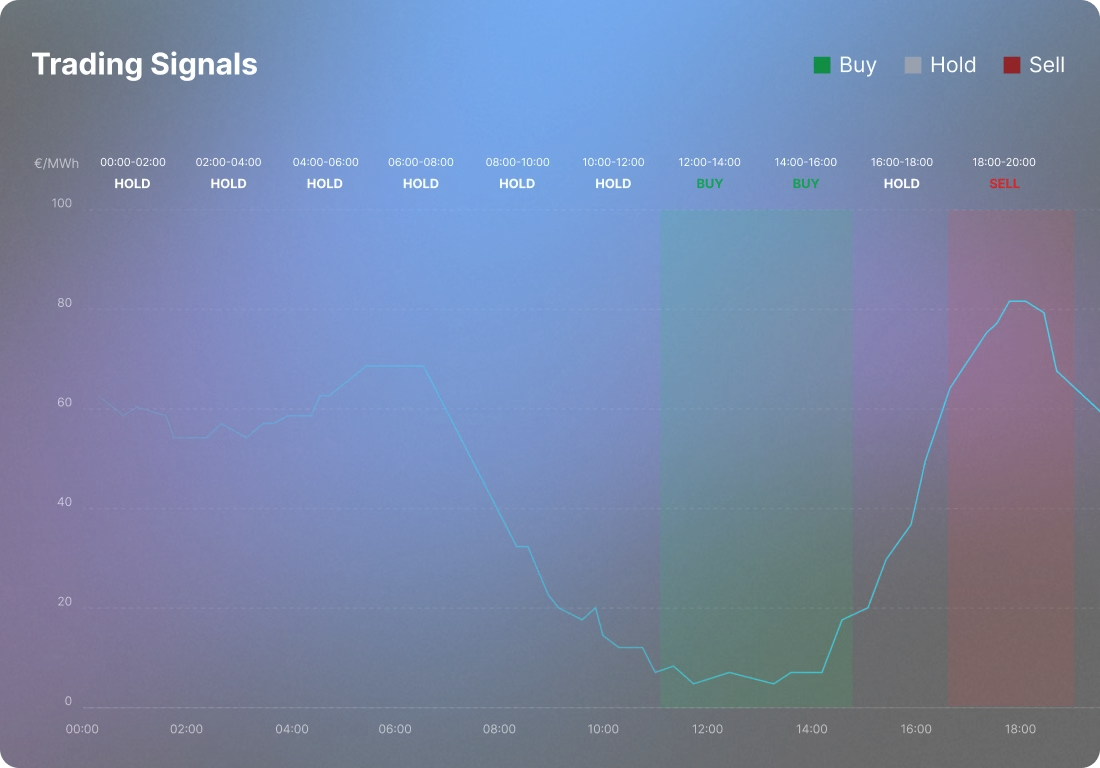
- Predict price movements
- Improve bid/offer strategies
- Enable data-driven trading decisions

- Maximize arbitrage opportunities
- Improve asset utilization
- Extend battery lifecycle through smarter usage

- Reduce peak demand charges
- Improve load balancing
- Enable proactive demand response

- Increase forecast reliability
- Improve grid compliance
- Optimize renewable integration

Energy Cost Optimization
Systems for forecasting, pattern recognition, and optimization
- Minimize imbalance penalties
- Optimize energy purchasing
- Improve overall system efficiency

Supporting all kinds of energy operators
Forecasting models are designed to operate across different layers of the energy ecosystem, supporting both operational systems and market participants.
From integration to production in days
Forecasting models are integrated into existing energy systems within 5 days through an application programming interface.
01. Data Connection
We connect historical and real-time data from energy systems, including telemetry, weather sources, and market feeds
02. Model Configuration
We configure forecasting models for solar generation, load consumption, and market pricing based on asset characteristics and operational requirements
03. Software Integration
We integrate forecasts into energy software or trading systems, and validate performance in real operational scenarios
04. Cloud Deployment
We deploy models into production with continuous monitoring, retraining, and performance optimization
Designed to scale with your infrastructure
Inside Nexenergie’s office today
Thinking behind the systems
Sharpen your vision of the industry with our research, reports, and perspectives that shape how we design intelligent systems.
Designing Predictive Energy Systems for Modern Energy Forecasting
A structured approach to solar generation forecasting, load consumption forecasting, and market price forecasting across EMS, BMS, BESS, IPP, OMIE, and EPEX environments
Integrating Forecasting into Energy Systems
Key patterns for deploying forecasting models within EMS, BMS, and OMIE trading environments
Managing Volatility in Energy Markets
Understanding how forecasting models improve performance in day-ahead and intraday markets
From Energy Forecasts to Operational and Trading Decisions
How forecasting models enable real-time operational and trading decisions across energy systems
Energy forecasting insights, delivered to your inbox
Frequently Asked Questions
Models are delivered via API and integrate directly into EMS, BMS, BESS, and trading systems without replacing existing infrastructure. Forecasts can be consumed in real time or batch workflows.
Historical energy data, weather data, and optionally market data. The exact requirements depend on the use case, but models can be configured based on available datasets.
Typical integration takes between 5 to 10 days, depending on data availability, system complexity, and required customization.
Forecasting models achieve up to 94.7% accuracy, depending on the dataset, asset type, and forecasting horizon. Performance improves over time through continuous retraining.
Forecasts can be updated in real time or at predefined 15-min intervals, depending on system requirements.
Yes. Models are continuously retrained using incoming operational data to maintain performance under changing weather, demand patterns, and market conditions.
Pricing is based on the number of locations and models used, with a monthly structure designed to scale with your energy operations.
Yes. Forecasting models support both operational decision-making and market day-ahead and intraday trading.
Ready to forecast what’s coming?
Fill the form to get in touch